

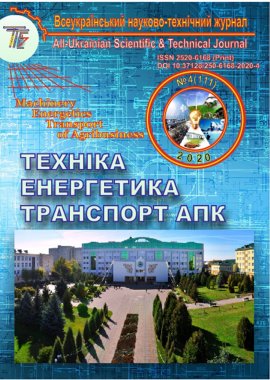
Issue №: 4(111)
The journal solves the problems of creation and improvement of machinery and technologies for agriculture: 131 - Applied Mechanics, 132 - Materials Science, 133 - Industrial Engineering, 141 - Power Engineering, Electrical Engineering and Electromechanics, 208 - Agricultural Engineering.
ANALYSIS OF THE STATE OF POST-HARVEST PROCESSING OF PUMPKIN SEEDS IN UKRAINE
Tsurkan Oleh – D.Eng.Sc., associate professor of the Department of «Technological processes and equipment of processing and food industries» of Vinnytsia National Agrarian University, director of Separate structural unit «Ladyzhyn Professional College of Vinnytsia National Agrarian University» (5, P. Kravchyka St., Ladyzhyn, Vinnytsia region, 24321, Ukraine, e-mail: tsurkan_ov76@ukr.net)
Prysiazhniuk Dmytro – Ph.D., teacher of Separate structural unit «Ladyzhyn Professional College of Vinnytsia National Agrarian University» (5, P. Kravchyka St., Ladyzhyn, Vinnytsia region, 24321, Ukraine, e-mail: dima061992@yahoo.com).
Didyk Ivan – teacher of Separate structural unit «Ladyzhyn Professional College of Vinnytsia National Agrarian University» (5, P. Kravchyka St., Ladyzhyn, Vinnytsia region, 24321, Ukraine, e-mail: ivan.didyk1670@gmail.com).
One of the important stages of growing seeds of agricultural crops is its post-harvest processing, which includes the drying process, is the main and one of the most effective methods for storing and processing agricultural raw materials. The use of vibration drying equipment is especially effective in high-tech processes taking place in the seed industry, where product moisture is the most important condition for the implementation of technology.
The object of research in this article was the technological process of post-harvest processing of high-moisture pumpkin seeds, in particular drying.
The purpose of the work was to analyze the current state of post-harvest processing of high-moisture pumpkin seeds and to establish promising methods and means for intensifying this process with a simultaneous increase in the quality of the final raw material obtained.
The task of the work was: to review research and publications on the state of post-harvest processing of pumpkin seeds in Ukraine, to establish the features of its post-harvest dues, in particular drying, to get acquainted with the technical means and technologies for performing the technological process of drying pumpkin seeds, to establish the main disadvantages of the existing drying equipment, to determine and to propose new promising technologies and technical solutions for intensifying the drying process of pumpkin seeds with a simultaneous increase in the quality of the final raw material with minimal energy consumption and translate them into a developed model of a vibration dryer, which sequentially implements filtration and convection stages of drying.
The research methodology was based on a review analysis of existing studies and publications on the state of post-harvest treatment of pumpkin seeds in Ukraine and the search for ways to intensify this process with a simultaneous increase in the quality of the final raw material obtained.
In scientific work, based on the results of the study, it was found that the existing grain drying equipment does not meet the requirements for drying high-moisture pumpkin seeds, therefore there is a need for the development, research and implementation of energy-efficient schemes and structures. The existing samples of domestic equipment for post-harvest processing of high-moisture pumpkin seeds are morally and physically obsolete, do not provide flexibility in the execution of the technological process, are energy- and metal-intensive and cannot be used in processing lots of seed material.
The proposed design of a vibrating dryer, which sequentially implements filtration and convection stages of drying pumpkin seeds. The developed installation provides an intensification of this process with minimal energy consumption while increasing the quality of the final raw material obtained.
[1] Rebinder, P.A. (1958). Fiziko-himicheskaya mehanika novaya oblast nauki. Moskva. 63 s. [in Russian].
[2] Golubkovich, A.V., Chizhikov, A.G. (1991). Sushka vyisokovlazhnyih semyan i zerna. Moskva. 235 s. [in Russian].
[3] Pavlovskiy, G.T., Ptitsyin, S.D. (1972). Ochistka, sushka i aktivnoe ventilirovanie zerna. Moskva.
256 s. [in Russian].
[4] Lyikov, A.V. (1971). Teplomassoobmen. Moskva. 560 s. [in Russian].
[5] Ginzburg, A.S. (1960). Sushka pischevyih produktov. Moskva. 684 s. [in Russian].
[6] Filonenko, G.K., Grishin, M.A., Goldenberg, Ya.M. (1971). Sushka pischevyih rastitelnyih materialov. Moskva. 435 s. [in Russian].
[7] Lewis, W.K. (1921). The Rate of Drying of Solid Materials. The Journal of Industrial and Engineering Chemistry. Vol. 13. № 5. pp. 427-432. [in English].
[8] Sherwood, T.K. (1937). Adsorption and extraction. New York. 278 p. [in English].
[9] Lebedev, P.D. (1963). Raschet i proektirovanie sushilnyih ustanovok. Moskva. 320 s. [in Russian].
[10] Kotov, B.I., Stepanenko, S.P., Kalinichenko, R.A. (2017). Kontseptualni osnovy stvorennia tekhnichnykh zasobiv pervynnoi obrobky zerna v umovakh hospodarstv APK. Konstruiuvannia, vyrobnytstvo ta ekspluatatsiia silskohospodarskykh mashyn. Vyp. 47. Ch. 1. S. 104-114. [in Ukrainian].
[11] Chlenov, V.A., Mihaylov, N.V. (1972). Vibrokipyaschiy sloy. Moskva. 340 s. [in Russian].
[12] Shapovalenko, O.I., Yaniuk, T.I. (2000). Mikrokhvylova obrobka pshenychnykh zarodkiv i sushinnia infrachervonym vyprominiuvanniam. Zerno i khlib. № 4. S. 20-21. [in Ukrainian].
[13] Baum, A.E., Rezchikov, V.A. (1983). Sushka zerna. Moskva. 223 s. [in Russian].
[14] Dolinskiy, A.A., Maletskaya, K.D. (2015). Raspyilitelnaya sushka. T. 2. Teplotehnologii i oborudovanie dlya polucheniya poroshkovyih materialov. Kiev. 390 s. [in Ukrainian].
[15] Zhidko, V.I., Rezchikov, V.A., Ukolov, V.S. (1982). Zernosushenie i zernosushilki. Moskva. 1982.
239 s. [in Russian].
[16] Didukh, V.F. (2003). Naukovo-tekhnolohichni osnovy mekhanizovanoho sushinnia neodnoridnykh roslynnykh materialiv: dys. ... d-ra tekhn. nauk: 05.05.11. Lutsk. [in Ukrainian].
[17] Maksimov, G.A. (1956). Issledovanie protsessov teplo- i massoobmena pri vnutrennem istochnike: avtoref. dis. … d-ra tehn. nauk. Moskva. 35 s. [in Russian].
[18] Chursinov, Yu.A. (2006). Porivnialnyi ohliad tekhnichnykh zasobiv sushinnia zerna. Propozytsiia.
№ 1. S. 122-124. [in Ukrainian].
[19] Stankevych, H.M., Strakhova, T.V., Budiuk, L.F. (2014). Doslidzhennia propusknoi zdatnosti zernosusharok pry riznykh sposobakh ta rezhymakh sushinnia zerna kukurudzy. Naukovi pratsi ONAKhT. Vyp. 46 (1). S. 106-110. [in Russian].
[20] Aniskin, V.I., Ryibaruk, V.A. (1968). Opredelenie udelnoy poverhnosti zerna metodom pronitsaemosti sloya. Mehanizatsiya i elektrifikatsiya sotsialisticheskogo selskogo hozyaystva. № 8. S. 20-24. [in Russian].
[21] Grishin, M.A., Atanazevich, V.I., Semenov, Yu.G. (1989). Ustanovki dlya sushki pischevyih produktov: Spravochnik. Moskva. 215 s. [in Russian].
[22] Atamaniuk, V.M. (1995). Hidrodynamika ta masoobmin v protsesi filtratsiinoho sushinnia khimichnoho volokna: dys. ... kand. tekhn. nauk: 05.17.08. Lviv. [in Ukrainian].
[23] Sniezhkin, Yu.F., Chalaiev, D.M., Shavryn, V.S. (2009). Teplovi nasosy v systemakh teplokholodopostachannia. Kyiv. 104 s. [in Ukrainian].
[24] Rudobashta, S.P. (1980). Massoperenos v sistemah s tverdoy fazoy. Moskva. 248 s. [in Russian].
[25] Rynok zerna vrozhaiu 2018 roku. Sumy, 2018. URL: http://www.propozitsiya.com/ua/rynok-zerna-vrozhayu-2016-roku (data zvernennia: 15.10.2020).
[26] Vrozhai zernovykh-2018: vstanovleno istorychnyi rekord. Kyiv, 2018. URL: http://www.landlord.ua/news/vrozhay-zernovih-2018-vstanovleno-istorichniy-rekord/ (data zvernennia: 25.10.2020).
[27] Harbuz znovu v modi. Kyiv, 2019. URL: http://agro-business.com.ua/agro/podiia/item/11521-harbuz-znovu-v-modi.html (data zvernennia: 27.10.2020).
[28] Hroshi iz harbuza: investytsii v vyrobnytstva harbuzovoho nasinnia okupliatsia za 4-5 misiatsiv. Dnipro, 2017. URL: http://chp.com.ua/ua/all-news/item/53226-groshi-iz-garbuza-investitsiji-v-virobnitstva-garbuzovogo-nasin-nya-okuplyatsya-za-4-5-misyatsiv (data zvernennia: 27.10.2020).
[29] Anisimov, I.F. (1987). Mashinyi i potochnyie linii dlya proizvodstva semyan ovoschevodcheskih kultur. Kishinev. 300 s. [in Russian].
About the journal
G8 – Materials Science
G9 – Applied Mechanics
G10 – Metallurgy
G11 – Mechanical Engineering (by specializations)
The journal "Engineering, Energy, Transport AIC" is indexed according to the following databases and catalogs:


The All-Ukrainian scientific journal “Technology, energy, agriculture transport AIC” is an open-access scientific publication that publishes the results of original research, theoretical and applied developments, as well as scientific papers in the fields of engineering sciences, energy systems, and transport technologies of the agro-industrial complex.
The main objective of the scientific journal “Technology, energy, agriculture transport AIC” is to disseminate the results of modern scientific research and to promote the development of technical, energy, and transport solutions for the agro-industrial complex through the publication of scientific materials characterized by scientific novelty and practical significance in the field of design and modernization of machinery, equipment, and technologies.
The journal’s activities are focused on supporting the development of engineering science, stimulating the implementation of innovative approaches into industrial practice, as well as ensuring effective exchange of scientific achievements among researchers, educators, engineers, and other specialists in relevant fields.
Objectives of the Journal
To achieve its defined objective, the journal ensures the implementation of the following key tasks:
· publication of the results of fundamental and applied research covering the fields of applied mechanics, mechanical engineering, materials science, energy systems, electrical engineering, electromechanics, and transport systems of the agro-industrial sector;
· promotion of the implementation of advanced technical and technological developments aimed at improving the efficiency of machinery, equipment, and production processes;
· creation of conditions for active scientific exchange among research institutions, higher education institutions, industrial enterprises, and other interested organizations;
· support for the development of interdisciplinary research and expansion of cooperation among specialists in various fields of science and technology;
· promotion of the improvement of the scientific and technical level of research related to the design, modernization, and operation of technical equipment used in agro-industrial production;
· dissemination of information on modern achievements in science and technology and the implementation of innovative technologies in the fields of technical support, energy, and transport;
· development of a scientific information environment that facilitates effective scientific communication and the integration of national research into the international scientific community.
Publication frequency: 4 issues per year
Languages of publication: Ukrainian, English
Editor-in-Chief: Vitalii YAROPUD
State Registration: Decision of the National Council of Ukraine on Television and Radio Broadcasting № 1337 and № 1180. Media Identifier: R30-05173
EDRPOU Code: 00497236
Publisher ROR: https://ror.org/05m3ysc06
Publisher DOI prefix: 10.37128 ISSN (print): 2520-6168
The scientific journal is included in Category “B” of the List of Scientific Professional Publications of Ukraine in which the results of dissertation research for obtaining the degrees of Doctor and Candidate of Sciences may be published in the following specialties: G8 – Materials Science; G9 – Applied Mechanics; G10 – Metallurgy; G11 – Mechanical Engineering (by specializations). (Order of the Ministry of Education and Science of Ukraine dated June 11, 2026 №928
Technology, energy, agriculture transport AIC is a scholarly professional journal with a long-standing history and stable academic tradition, reflecting the evolution of engineering and technical sciences within the agro-industrial sector of Ukraine.
The journal was founded in 1997 under the title Bulletin of Vinnytsia State Agricultural Institute. According to the Resolution of the Presidium of the Higher Attestation Commission of Ukraine dated September 11, 1997, the publication obtained the status of a professional scientific journal, which enabled the publication of the main results of doctoral and candidate dissertations in technical sciences. From its inception, the journal positioned itself as an academic platform for addressing current issues of mechanization, electrification, and technical support of agricultural production. During 2001–2014, the journal was published under the title Proceedings of Vinnytsia National Agrarian University. Series: Technical Sciences (State Registration Certificate of Print Media KV No. 16644-5116 PR dated April 30, 2010). Throughout this period, a systematic approach to the selection and peer review of scientific manuscripts was established, the thematic scope of publications was expanded, and continuity of scientific directions as well as the development of sectoral engineering schools was ensured. Since 2015, the journal has been published under its current title, Technology, energy, agriculture transport AIC (State Registration Certificate No. 21906-11806 R dated March 12, 2016). The change of title reflected the expansion of the journal’s thematic coverage and its orientation toward interdisciplinary research in mechanical engineering, energy systems, electrical engineering, transport technologies, automation, and digital solutions for the agro-industrial complex.
