

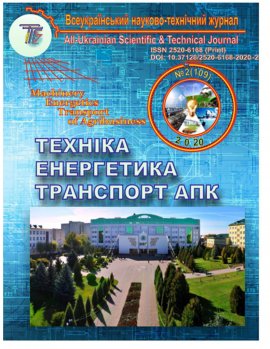
Issue №: 2(109)
В журналі вирішуються проблеми створення та удосконалення техніки та технологій для сільського господарства, харчових та переробних виробництв, машинобудування, енергетики та транспорту.
GLOBAL NAVIGATION SATELLITE SYSTEMS AND THEIR ROLE IN PRECISION AGRICULTURE TECHNOLOGIES
Kholodyuk Oleksandr - Ph.D, Senior Lecturer of the Department of "Operation of a machine-tractor park and technical service" of Vinnytsia National Agrarian University (3, Sonychna St., Vinnytsia, 21008, Ukraine, e-mail: holodyk@vsau.vin. ua).
Today, global navigation satellite systems are being implemented in many structural units of the Ukrainian economic complex, many spheres of human activity, and every year they continue to develop. One of the main feature of these satellite systems is the requirements for high accuracy and speed of received data. They provide the opportunity to reduce operating costs and increase the efficiency of use of equipment and other resources.
Therefore, the use of navigation satellite systems for controlling machine units, establishing their location, monitoring soil condition and yield mapping is becoming increasingly relevant today.
The subject of study in this article were global navigation satellite systems NAVSTARGPS (USA), GLONASS (RF), GALILEO (EU), BEIDOU (China) and regional navigation systems NavIC (India) and QUASI-ZENITH (Japan).
The purpose of the work was to clarify and establish the main characteristics of global navigation satellite systems and their role in the implementation of precision agriculture technologies.
The task of the work was: to analyze the functional characteristics of global positioning satellite systems and their main elements; to find out principles of operation of systems: navigation, coordinates, time; to establish the accuracy of navigation systems; to substantiate the role of global positioning satellite systems in the effective implementation of precision agriculture technologies in agriculture.
The research methodology was based on the method of materialistic dialectics, methods of analysis and synthesis of both information from official sources and information from the works of other researchers.
Two major operators of satellite navigation systems the NAVSTAR GPS and GLONASS, which are similar in many respects, have been identified in the scientific work. Among the distinctive features there are the nature of the location, the motion of satellites in orbits and their total number, methods of encoding the CDMA and FDMA signals, the use of different coordinate systems WGS-84 and PZ90.11. As for the other two satellite navigation systems GALILEO and BEIDOU, they are developing rapidly with great ambition and potential. It is established that at the present time the accuracy of determining the coordinates of the GLONASS system is inferior to the performance of the American satellite navigation system GPS. GLONASS provides more accurate positioning in the northern latitudes and GPS in the middle.
It is noted that the positioning accuracy of machine units for the implementation of precision farming technologies can be improved (from 2 to 20 cm) due to differential signal correction with the help of free and commercial wideband satellite navigation subsystems. These services will allow to implement the tasks of precision driving, and therefore, to ensure the accurate implementation of sowing material, fertilizers and herbicides to spare them, accurate inter-row cultivation of industrial crops, accurate harvesting, etc., when performing agro-technological operations using ground vehicles and landless vehicles .
[1] Palamarchuk, V.D., Polishchuk, I.S., Mazur, V.A., Palamarchuk, O.D. (2017). Novitni tekhnolohiyi u roslynnytstvi. Vinnytsya. [in Ukrainian].
[2] Aniskevych, L.V., Voytyuk, D.H., Zakharin, F.M., Ponomarenko, S.O. (2018). Systema tochnoho zemlerobstva. Kyiv: NUBiP Ukrayina. [in Ukrainian].
[3] Revnivykh, S.H., Kosenko, V.E. (2019). Stan ta rozvytok sprytnykovykh navihatsiynykh system. [Status and development of satellite navigation systems]. XIII Vserossyyskoe soveshchanye po problemnomu upravlinnyu VSPU-2019: Trudy (17-20 lypnya 2019 r.). 1317–1322. [in Russian].
[4] Yarosh, S.P., Budanov, M.S., Haponov, O.YU., Flyachok, YU.O. (2019). Zahalʹnoyevropeysʹkyy hlobalʹnyy systemnyy vlasnyy zhytelʹ dlya velykykh boyovykh mozhlyvostey zelenykh raketnykh viysʹk. Zbirnyk naukovykh pratsivnykiv Kharkivsʹkoho natsionalʹnoho universytetu Povitryanykh Syl. 2 (60). 33–42. [in Ukrainian].
[5] Tkachenko, V. (2019). GPS i vsi-vsi. Merezhi ta Biznes. 3(106). 79–83. [in Ukrainian].
[6] Ken, A. (2018) Hlobalʹna systema pozytsionuvannya (GPS) Spoluchenykh Shtativ Ameryky. Doklad na 13-mu zasidanni Mizhnarodnyy komitet po HNSS, Sianʹ, Kytay, (5-9 lystopada 2018 roku). URL: http://www.unoosa.org/oosa/en/ourwork/ icg / zbory / icg-13 / icg-shchorichna zustrich-2018-rezentatsiyi.html [in English].
[7] Hlobalʹna navihatsiyna suputnykova systema GPS [Global GPS Navigation Satellite System]. Retrieved from https://www.glonass-iac.ru/guide/gnss/gps.php [in Russian].
[8] Hlobalʹna navihatsiyna suputnykova systema GLONASS [GLONASS Global Navigation Satellite System]. Retrieved from https://www.glonass-iac.ru/guide/gnss/glonass. [in Russian].
[9] Revnivykh S., (2018). Informatsiyni suputnykovi systemy. Stan ta evolyutsiya HLONASS. Doklad na 12-y Yezhehodnoyi bashkivsʹkoyi konferentsiyi po HNSS (7 travnya 2018). Bashka. [in English].
[10] Hlobalʹna navihatsiyna suputnykova systema GALILEO [GALILEO Global Navigation Satellite System]. Retrieved from https://www.glonass-iac.ru/guide/gnss/galileo.php [in Russian].
[11] Suputnykova navihatsiya: osnovni pryntsypy roboty [Satellite Navigation: Basic Principles of Operation]. Retrieved from https: //oko.ukr/articles/GPS_ GLONASS_AGPS_RTK/ [in Ukrainian].
[12] Hlobalʹna navihatsiyna suputnykova systema BEIDOU [BEIDOU Global Navigation Satellite System]. Retrieved from https://www.glonass-iac.ru/guide/gnss/beidou.php [in Russian].
[13] Napryamky 2020: BeiDou v noviy eri hlobalizatsiyi. Retrieved from https://www.gpsworld.com/directions-2020-beidou-in-the-new-era-of-globalization/ [in English].
[14] Hlobalʹna navihatsiyna suputnykova systema NavIC [Navic Global Navigation Satellite System]. Retrieved from https://www.glonass-iac.ru/guide/gnss/navic.php [in Russian].
[15] Hlobalʹna navihatsiyna suputnykova systema QZSS [QZSS Global Navigation Satellite System]. Retrieved from https://www.glonass-iac.ru/guide/gnss/qzss.php [in Russian].
[16] Quasi-Zenith Satellite System (QZSS). Retrieved from https: //qzss.go.jp/en/ index.html [in English].
[17] Platni syhnaly omnistar, trimble rtx, rtk ta terra star [Paid signals omnistar, trimble rtx, rtk and terra star]. Retrieved from https://geoagronavt.com.ua/ g2897460-platnye-signaly-omnistar [in Ukrainian].
[18] Sputnykova systema dyferentsialʹnoyi korrektsiyi OmniSTAR [OmniSTAR Satellite Differential Correction System]. Retrieved from http://www.kmcgeo. com/ Articles/OmniSTAR.htm [in Ukrainian].
[19] Stantsiyi tochnoho pozytsionuvannya, polevi laboratoriyi, skanery poshty ta inshi rishennya dlya ukrayinsʹkykh fermeriv [Precision positioning stations, field laboratories, soil scanners and other solutions for Ukrainian farmers]. Retrieved from https://systemnet.com.ua/ua/gmsp/ [in Ukrainian].
[20] Melʹnyk, V., Tsyhanenko, M., Anikeyev, A., Syrovytsʹkyy, K. (2015). Ekonomichna efektyvnistʹ elementiv elementiv tochnoho zemledeliya. Motrol: vvedennya v ekspluatatsiyu motoryzatsiyi ta enerhetyky v silʹsʹkomu hospodarstvi. (17), 3. 61–66. [in Ukrainian].
[21] Yak pochaly vprovadzhuvaty tochne zemlerobstvo na pidpryyemstvi [Getting Started with Precision Farming at Enterprise]. Retrieved from https://smartfarming. ua/ua-blog/kak-nachat-vnedryat-tochnoe-zemledelie-na-predpriyatii [in Ukrainian].
[22] Tsyhanenko, M. (2017). Makarenko M. Systema tochnoho zemlerobstva ekonomytʹ svoyi hroshi. Propozytsiya. 2. 56–59. [in Ukrainian].
[23] Klymova, N.V., Trubacheva, E.A. (2016) Ekonomichnyy rist silʹsʹkohospodarsʹkykh pidpryyemstv na bazi vnedrenykh innovatsiynykh resursivsberehayuchykh tekhnolohiy. Ekonomika: vchora, sʹohodni i zavtra. 4. 22–34. [in Ukrainian].
About the journal
G8 – Materials Science
G9 – Applied Mechanics
G10 – Metallurgy
G11 – Mechanical Engineering (by specializations)
The journal "Engineering, Energy, Transport AIC" is indexed according to the following databases and catalogs:


The All-Ukrainian scientific journal “Technology, energy, agriculture transport AIC” is an open-access scientific publication that publishes the results of original research, theoretical and applied developments, as well as scientific papers in the fields of engineering sciences, energy systems, and transport technologies of the agro-industrial complex.
The main objective of the scientific journal “Technology, energy, agriculture transport AIC” is to disseminate the results of modern scientific research and to promote the development of technical, energy, and transport solutions for the agro-industrial complex through the publication of scientific materials characterized by scientific novelty and practical significance in the field of design and modernization of machinery, equipment, and technologies.
The journal’s activities are focused on supporting the development of engineering science, stimulating the implementation of innovative approaches into industrial practice, as well as ensuring effective exchange of scientific achievements among researchers, educators, engineers, and other specialists in relevant fields.
Objectives of the Journal
To achieve its defined objective, the journal ensures the implementation of the following key tasks:
· publication of the results of fundamental and applied research covering the fields of applied mechanics, mechanical engineering, materials science, energy systems, electrical engineering, electromechanics, and transport systems of the agro-industrial sector;
· promotion of the implementation of advanced technical and technological developments aimed at improving the efficiency of machinery, equipment, and production processes;
· creation of conditions for active scientific exchange among research institutions, higher education institutions, industrial enterprises, and other interested organizations;
· support for the development of interdisciplinary research and expansion of cooperation among specialists in various fields of science and technology;
· promotion of the improvement of the scientific and technical level of research related to the design, modernization, and operation of technical equipment used in agro-industrial production;
· dissemination of information on modern achievements in science and technology and the implementation of innovative technologies in the fields of technical support, energy, and transport;
· development of a scientific information environment that facilitates effective scientific communication and the integration of national research into the international scientific community.
Publication frequency: 4 issues per year
Languages of publication: Ukrainian, English
Editor-in-Chief: Vitalii YAROPUD
State Registration: Decision of the National Council of Ukraine on Television and Radio Broadcasting № 1337 and № 1180. Media Identifier: R30-05173
EDRPOU Code: 00497236
Publisher ROR: https://ror.org/05m3ysc06
Publisher DOI prefix: 10.37128 ISSN (print): 2520-6168
The scientific journal is included in Category “B” of the List of Scientific Professional Publications of Ukraine in which the results of dissertation research for obtaining the degrees of Doctor and Candidate of Sciences may be published in the following specialties: G8 – Materials Science; G9 – Applied Mechanics; G10 – Metallurgy; G11 – Mechanical Engineering (by specializations). (Order of the Ministry of Education and Science of Ukraine dated June 11, 2026 №928
Technology, energy, agriculture transport AIC is a scholarly professional journal with a long-standing history and stable academic tradition, reflecting the evolution of engineering and technical sciences within the agro-industrial sector of Ukraine.
The journal was founded in 1997 under the title Bulletin of Vinnytsia State Agricultural Institute. According to the Resolution of the Presidium of the Higher Attestation Commission of Ukraine dated September 11, 1997, the publication obtained the status of a professional scientific journal, which enabled the publication of the main results of doctoral and candidate dissertations in technical sciences. From its inception, the journal positioned itself as an academic platform for addressing current issues of mechanization, electrification, and technical support of agricultural production. During 2001–2014, the journal was published under the title Proceedings of Vinnytsia National Agrarian University. Series: Technical Sciences (State Registration Certificate of Print Media KV No. 16644-5116 PR dated April 30, 2010). Throughout this period, a systematic approach to the selection and peer review of scientific manuscripts was established, the thematic scope of publications was expanded, and continuity of scientific directions as well as the development of sectoral engineering schools was ensured. Since 2015, the journal has been published under its current title, Technology, energy, agriculture transport AIC (State Registration Certificate No. 21906-11806 R dated March 12, 2016). The change of title reflected the expansion of the journal’s thematic coverage and its orientation toward interdisciplinary research in mechanical engineering, energy systems, electrical engineering, transport technologies, automation, and digital solutions for the agro-industrial complex.
