

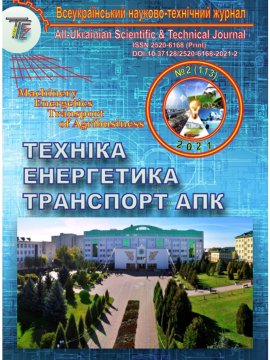
Issue №: 2(113)
The journal solves the problems of creation and improvement of machinery and technologies for agriculture: 131 - Applied Mechanics, 132 - Materials Science, 133 - Industrial Engineering, 141 - Power Engineering, Electrical Engineering and Electromechanics, 208 - Agricultural Engineering.
TECHNOLOGY OF MIXED TRAINING OF FUTURE MECHANICAL ENGINEERS IN THE CONDITIONS OF UNPC «ALL-UKRAINIAN SCIENTIFIC AND EDUCATIONAL CONSORTIUM»
Iryna Gunko – Ph.D., Associate Professor, Vice-rector for scientific-pedagogical and educational work Vinnytsia National Agrarian University (3 Solnechnaya St, Vinnytsia, 21008, Ukraine, email: irynagunko@vsau.vin.ua, https://orcid.org/0000-0001-5470-7413).
Elena Levchuk – Ph.D. of Pedagogic Sciences, Associate Professor of Mathematics, physics and computer technology, Vinnytsia National Agrarian University. (21008, Vinnitsa, Soniachna st. 3, e-mail: olena_levcukk@ukr.net, https://orcid.org/0000-0001-5046-2367).
The article discusses the need to transform the traditional professional training of a future mechanical engineer, which is associated with a number of contradictions due to new requirements for a graduate of an agricultural university. The issues of improving the quality of the fundamental and practical component are actualized, which the professional activity of a specialist in modern high-tech production needs - the development, operation, maintenance and management of new equipment, technologies and technical systems.
It is proved that a powerful means of eliminating these contradictions is the development of a strategy of agricultural educational institutions for the integration of science, education and production, focused on the current state of the agro-industrial complex. The scientific and educational industrial complex is considered as a concept of the mechanism for the transition of agro-industrial production to an innovative development model.
Substantiated is the author's student-centered technology of blended learning of future mechanical engineers in the conditions of the Educational-scientific industrial complex USEC «Ukrainian scientific-educational consortium». It has been proven that in the process of training mechanical engineers in the conditions of scientific and educational industrial complexes, the technology of blended learning with elements of dual education, based on the integration of traditional classroom and distance forms, using the best capabilities of each, will be effective.
The analysis of the existing practice of using distance and blended learning technologies in the process of training specialists is carried out, the psychological and pedagogical conditions for the design of student-centered education based on the blended learning technology are theoretically substantiated, a model for the design of blended learning technology is developed, the principles of selection of subject-specific information in the mathematical training of specialists are determined, student-centered technology of blended learning of future mechanical engineers (on the example of the course "Higher Mathematics"), prepared information resources and teaching materials are described.
[1] Shanhyna, E.Y. (2008). Problemы podhotovky budushchykh ynzhenerov v sovremennіkh uslovyiakh. [Problems of training future engineers in modern conditions]. Sybyrskyi pedahohycheskyi zhurnal, 15, 64–75 [in Ukrainian].
[2] Lutkovska S. M. (2018). Vykorystannia innovatsiinykh pedahohichnykh tekhnolohii pry vyvchenni pryrodnycho-naukovykh dystsyplin u ZVO ahrarnoho profiliu. [The use of innovative pedagogical technologies in the study of natural sciences in agrarian education]. Naukovi zapysky VDPU im. M. Kotsiubynskoho. Ser. Pedahohika i psykholohiia, 56, 153–157 [in Ukrainian].
[3] Kravets R. A. (2017) Teoretychni i metodychni osnovy polikulturnoi osvity maibutnikh fakhivtsiv ahrarnoi haluzi [Theoretical and methodical bases of multicultural education of future specialists of agrarian branch]. Vinnytsia : Planer [in Ukrainian].
[4] Kaletnik H.M., Adamchuk V.V., Bulhakov V. M. (2017) Stan ta osnovni perspektyvy pidhotovky vysokokvalifikovanykh inzhenernykh ta naukovykh kadriv v haluzi ahroinzhenerii [The standpoint of the main prospects for the preparation of high-quality engineering and s cientific personnel in agricultural engineering]. Tekhnika, enerhetyka, transport APK, 1 (96), 5-15 [in Ukrainian]..
[5] Voshchevska O.V. (2008) .Profesiina pidhotovka inzheneriv-ahrarnykiv v systemi vyshchoi osvity SShA [Professional training of agricultural engineers in the United States food education system]. Extended abstract of Doctor’s thesis. Ternopil [in Ukrainian]..
[6] Kaletnik H. M., Pidvalna O. H., Kolesnyk T. V. (2018). Diialnist universytetiv ta innovatsiinykh struktur za yikh uchastiu yak chynnyk staloho mistsevoho ta rehionalnoho rozvytku v umovakh provedennia reformy detsentralizatsii (na prykladi NNVK “Vseukrainskyi naukovo-navchalnyi konsortsium”) [The activity of universities and innovative structures for their participation as an official of the steel and regional development in the minds of the reform of decentralization (on the application of the NNVK "All-Ukrainian Science-Naval Consortium")]. Ekonomika. Finansy. Menedzhment: aktualni pytannia nauky i praktyky, 6, 17-27 [in Ukrainian]..
[7] Kaletnik, G.M., & Gun`ko, I.V,& Kiryeyeva, E.A. (2016) Prakty`chna realizaciya derzhavnoyi polity`ky` u sferi vy`shhoyi osvity` ta polozhen` novogo zakonu "Pro vy`shhu osvitu" v konceptual`ny`x zasadax pidgotovky` faxivciv na bazi NVVK "vseukrayins`ky`j naukovo-navchal`ny`j konsorcium [Adaptive concept of mathematical education of students of higher educational institutions and competitiveness of graduates: methodology, theory, practice.]. Ekonomika. Finansy`. Menedzhment: aktual`ni py`tannya nauky`– Economy. Finances. Management: topical issues of science, 9, 7–19 [in Ukrainian].
[8] Kaletnik H.M. (2013) Naukovo-navchalnyi-vyrobnychyi kompleks yak kontseptsiiia mekhanizmu perekhodu ahropromyslovoho vyrobnytstva na innovatsiinu model rozvytku [Scientific-educational-production complex as a concept of the mechanism of transition of agro-industrial production to an innovative model of development]. Ekonomika APK, 9, 5–11[in Ukrainian].
[9] Vidbulos zasidannia rady steikkholderiv inzhenerno-tekhnolohichnoho fakultetu [A meeting of the stakeholder council of the Faculty of Engineering and Technology was held]: veb-sait Vinnytskoho natsionalnoho ahrarnoho universytetu. Retrieved from https://vsau.org/novini/novini-vnau/vidbulos-zasidannya-radi-stejkxolderiv-inzhenerno-texnologichnogo-fakultetu [in Ukrainian].
[10] Diakonov H. S. (2013). Hlobalnыe zadachy ynzhenernoho obrazovanyia y podhotovka ynzhenerov v natsyonalnom yssledovatelskom unyversytete. [Global Challenges for Engineering Education and Training of Engineers at a National Research University]. Visshee obrazovanye Rossyy,12, 35-41.[іn Russіan].
[11] Duhanets, V. I. (2016). Teoriia i praktyka vyrobnychoho navchannia maibutnikh fakhivtsiv ahrarno-inzhenernoho napriamu [Theory and practice of the versatility of maybutnyh fahivtsiv agrarian-engineer directly]. Extended abstract of Doctor’s thesis. Ternopil [in Ukrainian].
[12] Kontseptsiia rozvytku dystantsiinoi osvity v Ukraini [The concept of distance education development in Ukraine]. Retrieved from http://kerivnyk.info/kontsepcia-rozvytku-dystancijnoi-osvity-v-ukraini [in Ukrainian].
[13] Andreev A. (1999). Dystantsyonnoe obuchenye: sushchnost, tekhnolohyia, orhanyzatsyia [Theory and practice of the versatility of maybutnyh fahivtsiv agrarian-engineer directly]. Moskva: MЭSY. [іn Russіan].
[14] Ohiienko O. I. (2012).Dystantsiina pedahohichna osvita: zarubizhnyi ta vitchyznianyi dosvid [Distant pedagogical education: foreign and vital information]. Metodychni rekomendatsii. Kyiv. Retrieved from https: http://ipood.com.ua/data/NDR/Information_technology/2012_Ogienko_recomend.pdf [in Ukrainian].
[15] Keegan D. (1996). Foundations of distanceeducation. Londonand New York: Routledge [In English].
[16] Polozhennia pro dystantsiine navchannia u Vinnytskomu natsionalnomu ahrarnomu universyteti / Vinnytskyi natsionalnyi ahrarnyi universytet [Regulations on distance learning at Vinnytsia National Agrarian University / Vinnytsia National Agrarian University]. (n.d.). vsau.org. Retrieved from https://vsau.org/assets/images/content/dokPDF/polozhennya-pro-dystantsiyne-navchannya.pdf [in Ukrainian].
[17] Polozhennia pro zdobuttia vyshchoi osvity za dualnoiu formoiu navchannia / Vinnytskyi natsionalnyi ahrarnyi universytet [Regulations on obtaining higher education in the dual form of education / Vinnytsia National Agrarian University]. (n.d.). vsau.org. Retrieved from https://vsau.org/assets/images/content/dokPDF/polozhennya%20-pro-dualnu-formu-navchannya.pdf [in Ukrainian].
[18] Polozhennia pro poriadok formuvannia vlasnoi traiektorii navchannia studentiv Vinnytskoho natsionalnoho ahrarnoho universytetu. / Vinnytskyi natsionalnyi ahrarnyi universytet [Regulations on the procedure for forming the own trajectory of students of Vinnytsia National Agrarian University]. (n.d.). vsau.org. Retrieved from https://vsau.org/publichna-informacziya [in Ukrainian].
[19] Perevahy i nedoliky dystantsiinoho navchannia [Overshoot and shortages of distance learning]. Osvita UA. Retrieved from https: http://ru.osvita.ua/vnz/reports/adv/46958/ [in Ukrainian].
[20] Математика у PISA-2018: результати і висновки. Докладний аналіз результатів PISA з математики [Mathematics in PISA-2018: results and conclusions. Detailed analysis of PISA results in mathematics]. Retrieved from https: https://nus.org.ua/articles/matematyka-u-pisa-2018-rezultaty-i-vysnovky/ [in Ukrainian].
[21] Striuk A. M. (2012). Systema «Ahapa» yak zasib navchannia systemnoho prohramuvannia bakalavriv prohramnoi inzhenerii [The "Agapa" system is designed for the systemic program of bachelor's degree programs in engineering]. Kyiv [in Ukrainian].
[22] Dzhedzhula O.M. (2018). Dualna osvita yak zasib sotsializatsii maibutnoho fakhivtsia [Dual coverage yak with socialization of the maybutny fakhivtsya]. Suchasni informatsiini tekhnolohii ta innovatsiini metodyky navchannia u pidhotovtsi fakhivtsiv: metodolohiia, teoriia, dosvid, problemy, 52, 15-19 [in Ukrainian].
[23] Electronic control system "Socrates". Retrieved from https: http://socrates.vsau.org/index.php/ua/pro-system [in Ukrainian].
[24] Draw.Chat - Virtual Classroom. Retrieved from https: https://draw.chat/[In English].
About the journal
G8 – Materials Science
G9 – Applied Mechanics
G10 – Metallurgy
G11 – Mechanical Engineering (by specializations)
The journal "Engineering, Energy, Transport AIC" is indexed according to the following databases and catalogs:


The All-Ukrainian scientific journal “Technology, energy, agriculture transport AIC” is an open-access scientific publication that publishes the results of original research, theoretical and applied developments, as well as scientific papers in the fields of engineering sciences, energy systems, and transport technologies of the agro-industrial complex.
The main objective of the scientific journal “Technology, energy, agriculture transport AIC” is to disseminate the results of modern scientific research and to promote the development of technical, energy, and transport solutions for the agro-industrial complex through the publication of scientific materials characterized by scientific novelty and practical significance in the field of design and modernization of machinery, equipment, and technologies.
The journal’s activities are focused on supporting the development of engineering science, stimulating the implementation of innovative approaches into industrial practice, as well as ensuring effective exchange of scientific achievements among researchers, educators, engineers, and other specialists in relevant fields.
Objectives of the Journal
To achieve its defined objective, the journal ensures the implementation of the following key tasks:
· publication of the results of fundamental and applied research covering the fields of applied mechanics, mechanical engineering, materials science, energy systems, electrical engineering, electromechanics, and transport systems of the agro-industrial sector;
· promotion of the implementation of advanced technical and technological developments aimed at improving the efficiency of machinery, equipment, and production processes;
· creation of conditions for active scientific exchange among research institutions, higher education institutions, industrial enterprises, and other interested organizations;
· support for the development of interdisciplinary research and expansion of cooperation among specialists in various fields of science and technology;
· promotion of the improvement of the scientific and technical level of research related to the design, modernization, and operation of technical equipment used in agro-industrial production;
· dissemination of information on modern achievements in science and technology and the implementation of innovative technologies in the fields of technical support, energy, and transport;
· development of a scientific information environment that facilitates effective scientific communication and the integration of national research into the international scientific community.
Publication frequency: 4 issues per year
Languages of publication: Ukrainian, English
Editor-in-Chief: Vitalii YAROPUD
State Registration: Decision of the National Council of Ukraine on Television and Radio Broadcasting № 1337 and № 1180. Media Identifier: R30-05173
EDRPOU Code: 00497236
Publisher ROR: https://ror.org/05m3ysc06
Publisher DOI prefix: 10.37128 ISSN (print): 2520-6168
The scientific journal is included in Category “B” of the List of Scientific Professional Publications of Ukraine in which the results of dissertation research for obtaining the degrees of Doctor and Candidate of Sciences may be published in the following specialties: G8 – Materials Science; G9 – Applied Mechanics; G10 – Metallurgy; G11 – Mechanical Engineering (by specializations). (Order of the Ministry of Education and Science of Ukraine dated June 11, 2026 №928
Technology, energy, agriculture transport AIC is a scholarly professional journal with a long-standing history and stable academic tradition, reflecting the evolution of engineering and technical sciences within the agro-industrial sector of Ukraine.
The journal was founded in 1997 under the title Bulletin of Vinnytsia State Agricultural Institute. According to the Resolution of the Presidium of the Higher Attestation Commission of Ukraine dated September 11, 1997, the publication obtained the status of a professional scientific journal, which enabled the publication of the main results of doctoral and candidate dissertations in technical sciences. From its inception, the journal positioned itself as an academic platform for addressing current issues of mechanization, electrification, and technical support of agricultural production. During 2001–2014, the journal was published under the title Proceedings of Vinnytsia National Agrarian University. Series: Technical Sciences (State Registration Certificate of Print Media KV No. 16644-5116 PR dated April 30, 2010). Throughout this period, a systematic approach to the selection and peer review of scientific manuscripts was established, the thematic scope of publications was expanded, and continuity of scientific directions as well as the development of sectoral engineering schools was ensured. Since 2015, the journal has been published under its current title, Technology, energy, agriculture transport AIC (State Registration Certificate No. 21906-11806 R dated March 12, 2016). The change of title reflected the expansion of the journal’s thematic coverage and its orientation toward interdisciplinary research in mechanical engineering, energy systems, electrical engineering, transport technologies, automation, and digital solutions for the agro-industrial complex.
